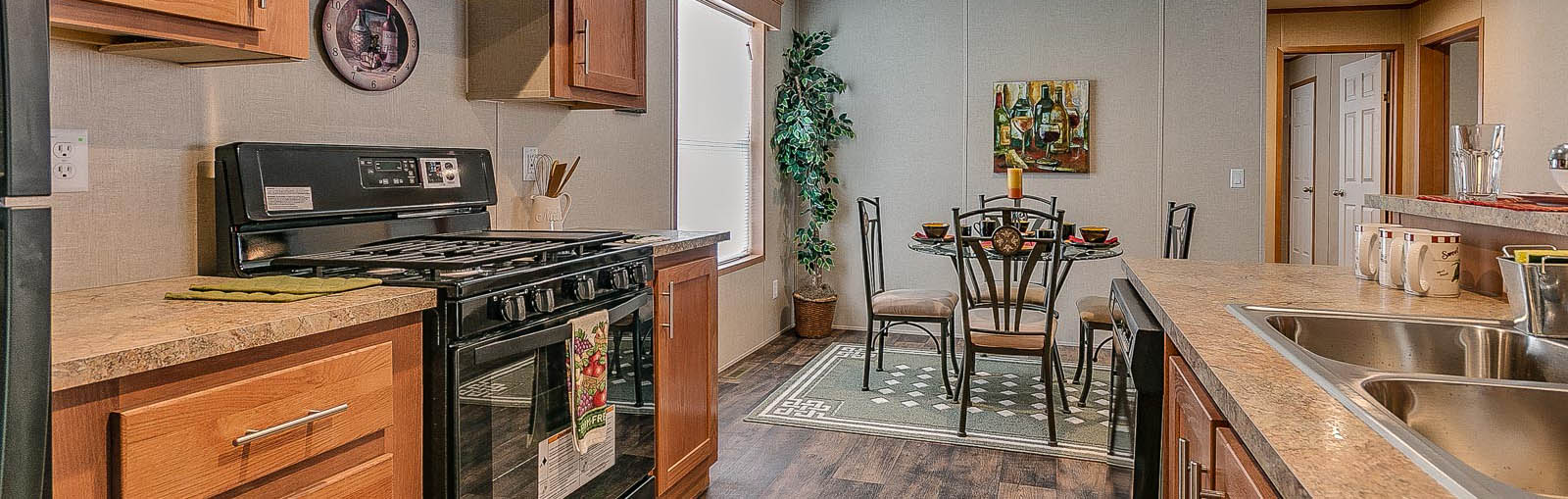
You know you want a factory built home, and now every listing says single wide, double wide or a size like 28×64. Before you fall for a floor plan, it helps to know what those labels mean and whether the home will actually fit the land you have in mind.
What Single Wide and Double Wide Mean
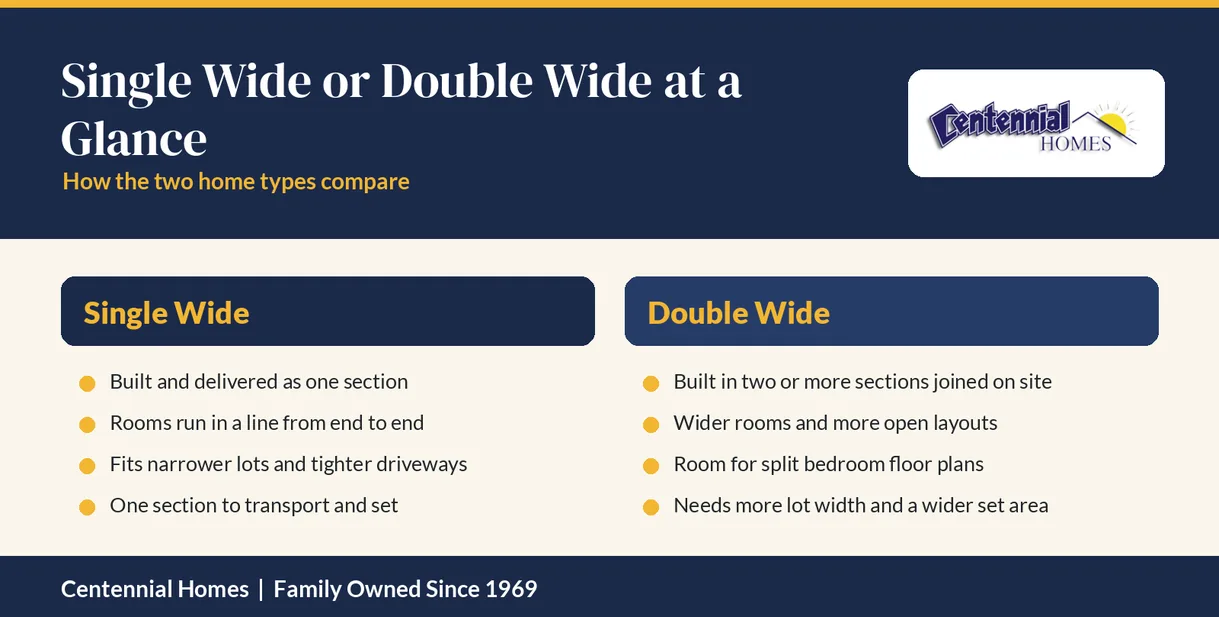
A single wide, also called a single section home, is built and delivered as one long piece. A double wide, or multi section home, is built as two or more pieces in the factory, trucked to your lot separately, and joined together on site into one home.
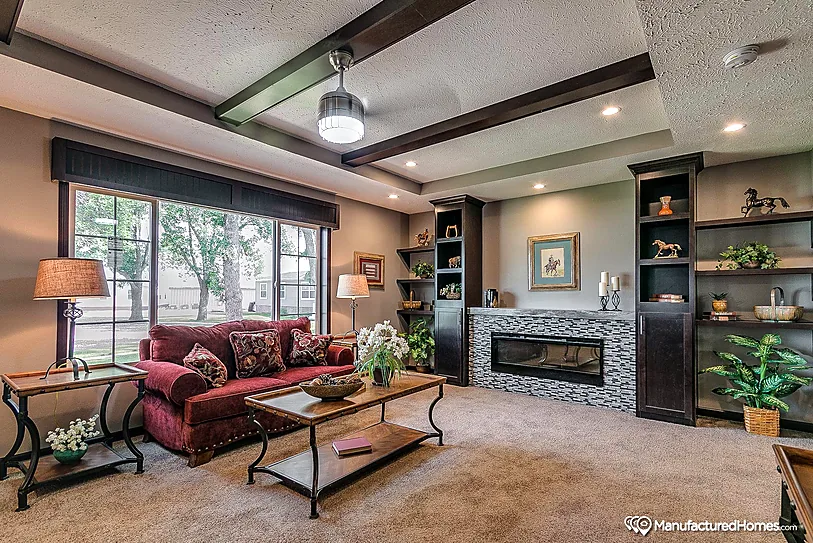
Because a double wide is roughly twice as wide, it can hold rooms side by side instead of in a line. That changes how the home lives: a wider living room, a kitchen with an island, and bedrooms that can be split to opposite ends of the house.
How to Read a Size Like 28×64
Listings usually give size as width by length in feet. A home listed as 28×64 is about 28 feet wide and 64 feet long. Many listings also give finished square footage, which is the number to use when you compare living space between two homes.
Keep in mind that the listed size describes the home, not the space it needs on your lot. Steps, decks, a garage and the setbacks your county or city requires all add to the footprint you need to plan for.
Layouts That Change How a Home Lives
In a single wide, the living room and kitchen usually sit in the middle with a bedroom at each end, which gives the primary bedroom some privacy. In a double wide, the extra width allows an open great room, a dining area that is separate from the kitchen, a larger primary suite with a walk in closet, and sometimes a utility room near the back door.
When you walk a model, picture a normal weekday. Where do muddy boots go? Where does everyone eat? How far is the laundry from the bedrooms? The answers usually point you toward the right layout faster than the square footage does.
Will It Fit Your Lot
Before you choose a size, gather three things about your land. First, the lot dimensions and the required setbacks from the property lines, street and other buildings. Second, the route in: a long section needs room to turn into the driveway and reach the set spot. Third, any rules for the area, such as minimum home width or foundation type, which your county or city zoning office can confirm.
If you are placing a home in a rural part of the Dakotas, our pages on manufactured homes in North Dakota and manufactured homes in South Dakota show the homes and local teams that serve each state.

Choosing Between the Two
A single wide often makes sense for a first home, a narrow lot, a farm hand house or a place near family. A double wide often makes sense for a growing household, a home you plan to stay in for many years, or a lot with room to spare. Neither choice is wrong; the right one is the home that fits both your land and your daily routine.
Families who visit a model home center often walk through one of each on the same day. Standing in both makes the difference clear in a few minutes.

Call (800) 455 8941 to talk with a Centennial Homes team near you, or send us a message.
Frequently Asked Questions
What does 28×64 mean on a manufactured home listing?
It is the size in feet, width by length. A 28×64 home is about 28 feet wide and 64 feet long. Use the finished square footage to compare living space between homes.
Are double wide mobile homes built differently than single wides?
Both are built in a factory. A double wide is built as two or more sections that are joined on your lot, which allows wider rooms and more open layouts.
Will a double wide fit on my lot?
Check the lot size, the setbacks your county or city requires, and whether a long section can make the turn into your driveway. A local team can walk the lot with you.
Is a single wide home a good choice for a narrow lot?
Often, yes. A single section home needs less width and a simpler set area, which can make it the practical choice for a narrow or tight lot.
Centennial Homes has helped families find factory built homes since 1969. We are family owned, build with Friendship Homes, and have model home centers across South Dakota, North Dakota and Montana.